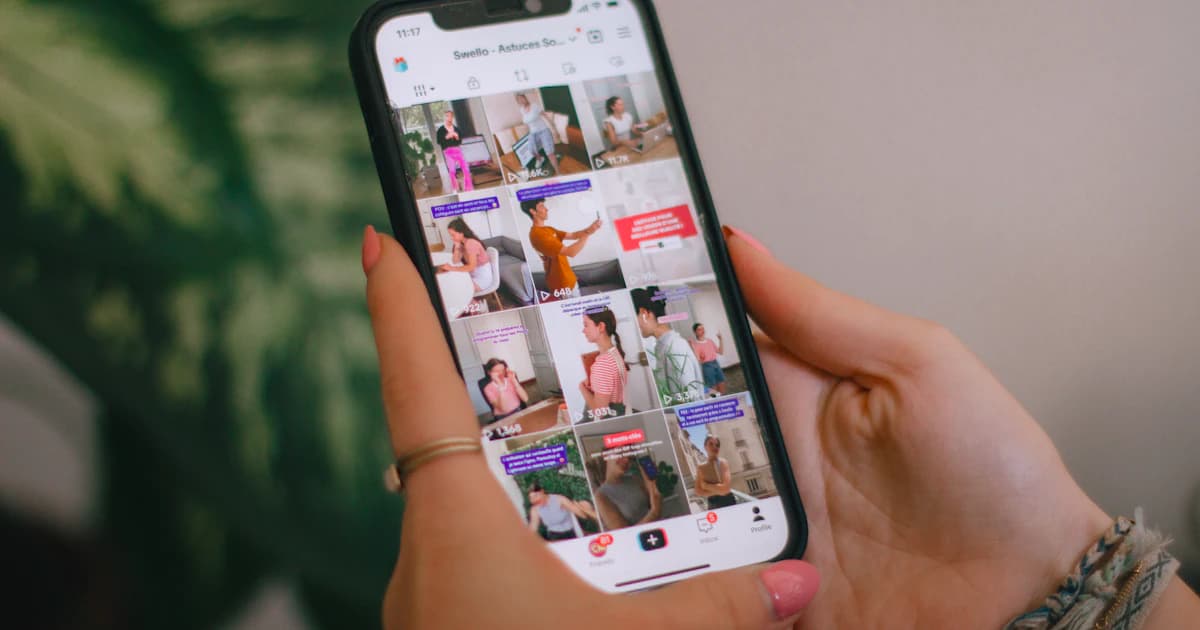
59% of TikTok's gaming audience discovers new games directly through the platform. Not through Steam recommendations, not through subreddit threads at 2 AM, not through that one friend who always says "trust me bro, it's good." Through TikTok. A platform most indie developers still treat like a mysterious side quest they'll get around to eventually.
Meanwhile, organic TikTok reach has been dropping like a rogue's health bar after pulling aggro on a raid boss. In 2024, average organic reach sat around 15-20%. By early 2026, creators are reporting 4-8% for many gaming accounts. TikTok wants your money now. The free ride era is over.
So TikTok is simultaneously the best discovery platform for games and a platform that increasingly punishes you for not paying. Sounds like a lose-lose, right?
Wrong. There's a strategy that turns this contradiction into a weapon. It's called paid organic, and it's quietly becoming the highest-ROI move in indie game marketing.
Why TikTok Still Matters (Even With Declining Reach)
Let's get the doom and gloom out of the way first. Yes, organic reach is down. Yes, the algorithm is pickier than a Dark Souls player choosing their starting class. But here's what TikTok still offers that no other platform matches:
- Discovery architecture - TikTok's For You Page shows content from accounts users don't follow. YouTube Shorts and Instagram Reels still heavily favor existing subscribers. TikTok is the only platform where a zero-follower account can hit a million views on its first post.
- Gaming audience density - Over 75% of TikTok users play games. The overlap between "people scrolling TikTok" and "people who might wishlist your game" is massive.
- Low production bar - A shaky screen recording of a funny bug in your game can outperform a $10,000 cinematic trailer. TikTok rewards authenticity over polish.
- Speed to virality - A TikTok clip can explode in 6-12 hours. A YouTube video takes days to weeks to find its audience through search and recommendations.
The platform isn't broken. The old strategy of "post and pray" is broken. Time for an upgrade.
What Is Paid Organic (And Why It's a Cheat Code)
Paid organic is not a fancy marketing buzzword invented by someone who charges $500/hour for consulting. It's a simple, repeatable process:
- Post organic content (or have creators post it for you)
- Wait 24-48 hours and identify which posts are performing above average
- Amplify the winners with TikTok Spark Ads - a small paid boost on content that's already proven it resonates
That's it. That's the playbook. You're not creating separate ad content. You're not guessing what will work. You're letting the algorithm tell you what's already working, then throwing fuel on that fire.
Why This Beats Pure Organic and Pure Paid
Here's the comparison that should make every indie dev sit up:
| Strategy | Cost per 1,000 Views | Wishlist Conversion | Cost per Wishlist | Scalability |
|---|---|---|---|---|
| Organic Only | Free | 2-5% | Free (but limited reach) | Low - algorithm-dependent |
| Paid Ads Only | $5-15 | 0.5-2% | $25-300 | High - but expensive |
| Paid Organic | $1-4 | 3-8% | $1-10 | High - proven content scales |
Read that last row again. $1-10 per wishlist. Compare that to traditional paid ads at $25-167 per wishlist. That's not a marginal improvement. That's the difference between a viable marketing strategy and lighting money on fire while hoping the smoke signal reaches gamers.
The magic is in the combination. Organic content that's already performing well has high engagement signals - likes, comments, shares, watch time. When you boost it with Spark Ads, TikTok's algorithm treats it more favorably than a cold ad because it already has social proof. You get cheaper impressions, better placement, and higher conversion rates.
It's like finding a weapon in the first area that scales with every stat. Broken? Maybe. But it's in the game, so use it.
The 5-Step Paid Organic Playbook
Here's the exact process, broken down so you can start this week.
Step 1: Build Your Content Pipeline
You need a steady stream of TikTok content - ideally 3-5 posts per week. But here's the thing: you don't have to make it all yourself.
Content formats that perform best for indie games on TikTok:
- Dev bug compilations - "Things that went wrong in development" videos consistently hit 100K+ views. Players love watching physics break.
- Satisfying mechanics loops - A 10-second clip of your game's core mechanic on repeat. Satisfying combat hits, fluid movement, procedural generation. Pure dopamine.
- Before/after development - Show a system at prototype stage vs. polished. "1 year of progress in 15 seconds" is catnip for the algorithm.
- Reaction bait - "My game has a secret ending nobody found yet" or "I hid something cursed in level 3." Mystery drives engagement.
- Creator gameplay clips - This is the big one. A creator playing your game and having a genuine reaction is more compelling than anything you can produce yourself.
You don't need a ring light and a production studio. You need a screen recorder and something interesting to show. If your game has even one moment that makes people say "wait, what?" - that's your TikTok content.
Step 2: Partner With TikTok Gaming Creators
This is where most indie devs stall out. Finding creators who actually make TikTok gaming content (not just YouTube creators who occasionally repost) requires effort.
What to look for in a TikTok gaming creator:
- Engagement rate over 5% - On TikTok, follower count matters less than engagement. A 3K follower account with 8% engagement outperforms a 50K account with 1%.
- Genre alignment - A creator who covers cozy games won't do justice to your survival horror. Match the vibe.
- Posting consistency - At least 3 posts per week. Dormant accounts won't help you.
- Spark Ads authorization - This is critical. The creator needs to authorize Spark Ads on their post so you can boost it. Without this, you can't run the paid organic strategy.
Where to find them:
The manual approach is searching TikTok hashtags like #indiegames, #gamedev, #indiegamedev and scrolling until your thumb goes numb. It works, but it's the equivalent of farming the same enemy for 8 hours to get a rare drop.
The smarter approach is using Gamosy to create a campaign and let creators who already cover your genre apply to you. More on that in a moment.
Step 3: Seed Content and Wait
Once you have 5-10 creators posting about your game (plus your own dev account content), you'll have a content pipeline generating 10-20 TikTok posts per week.
Here's what you're watching for in the first 24-48 hours after each post:
- Views above account average - If a creator normally gets 2,000 views and this post hit 8,000, that's a signal
- High completion rate - TikTok rewards videos people watch to the end
- Comment-to-view ratio above 1% - Comments indicate the algorithm is pushing the video into broader audiences
- Shares - The strongest signal. When people share a video to friends, TikTok goes "interesting" and opens the floodgates
Most posts will perform average. That's fine. You're looking for the outliers - the top 10-20% that the algorithm has already decided to push.
Step 4: Amplify Winners With Spark Ads
When you identify a winner, it's time to pour rocket fuel on it.
Setting up a Spark Ad:
- The creator generates a Spark Ad authorization code from their TikTok post
- You enter this code in TikTok Ads Manager and link the post to your ad account
- Set your campaign objective to "Traffic" (driving clicks to your Steam page) or "Video Views" (maximizing reach)
- Start with a modest daily budget - $10-20/day per post
- Let it run for 3-5 days and monitor cost per click (CPC) and cost per wishlist
Budget allocation by indie dev size:
| Budget Tier | Monthly Budget | Posts Boosted/Month | Expected Wishlists | Notes |
|---|---|---|---|---|
| Micro | $200 | 3-5 best performers | 200-1,000 | Perfect for pre-launch wishlist building |
| Standard | $500-1,000 | 8-15 best performers | 800-5,000 | Ideal around Steam Next Fest |
| Aggressive | $2,000-5,000 | 20-30 best performers | 3,000-15,000 | Launch month full push |
Notice even the micro budget generates meaningful results. $200 for 200-1,000 wishlists is a cost per wishlist of $0.20-1.00. Try getting that from Google Ads. You literally can't.
Step 5: Optimize and Scale
After your first week of Spark Ads, you'll have data. Glorious, actionable data.
- Which creators' content converts best? Double down on those partnerships.
- Which content formats drive clicks? Make more of those.
- What CPC are you seeing? If it's under $0.50, scale the budget up. If it's over $2.00, pause and try a different post.
- What's your Steam page conversion rate? If people are clicking but not wishlisting, your Steam page needs work - not your TikTok strategy.
The beauty of paid organic is that every cycle gives you better data. Post more content, identify more winners, boost them, measure results, repeat. It's a flywheel. And unlike pure paid advertising, the organic content keeps generating views even after you stop boosting.
TikTok vs YouTube Shorts vs Instagram Reels
"Should I even bother with TikTok? What about Shorts and Reels?"
Fair question. Here's the honest comparison:
| Factor | TikTok | YouTube Shorts | Instagram Reels |
|---|---|---|---|
| Gaming audience reach | Highest - 59% discover games here | Growing - leverages YouTube's gaming base | Lowest for gaming specifically |
| Organic discovery potential | Best - FYP surfaces unknown creators | Good - but favors existing subscribers | Moderate - heavily follower-dependent |
| Spark Ads equivalent | Spark Ads (excellent) | Promoted Shorts (limited) | Boosted Reels (decent) |
| Average CPM for gaming | $3-8 | $5-12 | $6-15 |
| Steam link clickability | Direct link in bio + comments | Direct link in description | Link in bio only (no post links) |
| Virality speed | 6-12 hours | 24-72 hours | 24-48 hours |
| Content lifespan | 2-7 days peak, then dies | Longer tail via YouTube search | 1-3 days peak |
The verdict: TikTok is the best platform for the paid organic strategy specifically because of Spark Ads, the lowest CPMs, and the strongest discovery architecture. YouTube Shorts is a solid secondary channel, especially because content has a longer lifespan through search. Instagram Reels is the weakest for gaming but worth cross-posting to if you're already making short-form content.
Run paid organic on TikTok first. If it works (and it probably will), expand to Shorts.
How Gamosy Makes This Easier
Let's be honest - the hardest part of this entire strategy isn't the ads. It's finding and coordinating creators. Sending DMs, verifying stats, distributing keys, confirming Spark Ads authorization, tracking who actually posted, measuring which content performed... it's a full-time job disguised as a marketing strategy.
This is exactly why Gamosy exists.
Here's how Gamosy fits into the paid organic playbook:
- Creator discovery and matching - Create a campaign for your game and Gamosy's matching system surfaces creators who cover your genre on TikTok (and other platforms). No manual hashtag scrolling required.
- Verified creator stats - Every creator on Gamosy connects via OAuth, so the follower counts and engagement rates are real. No inflated numbers, no purchased audiences.
- Secure key distribution - Send keys through KeyVault with access controls and tracking. Know exactly who received a key and whether they've redeemed it.
- Content tracking - See when creators publish content about your game, track views and engagement, and identify which posts are your Spark Ad candidates without manually checking 15 TikTok accounts every morning.
- Campaign analytics - Measure the full pipeline from key sent to content published to wishlists generated. Data you can actually use to optimize your next round.
Instead of managing a spreadsheet nightmare with creator names, email threads, key codes, and post URLs scattered across four different apps, everything lives in one place. You create the campaign, creators apply, you approve and send keys, they create content, you identify winners, and you boost them. Clean, trackable, repeatable.
Common Mistakes (And How to Avoid Them)
Mistake 1: Boosting Everything Instead of Winners
The whole point of paid organic is selectivity. If you boost every post regardless of organic performance, you're just running regular ads with extra steps. Only amplify content that's already showing above-average engagement. Let the algorithm do the initial filtering for you.
Mistake 2: Setting and Forgetting Spark Ads
A Spark Ad isn't a crockpot recipe. Check performance daily for the first 3 days. If CPC is climbing above $2, pause it. If it's dropping below $0.50, increase the budget. The window for maximum efficiency is usually 3-7 days per post.
Mistake 3: Ignoring the Steam Page
TikTok's job is to drive traffic. Your Steam page's job is to convert that traffic into wishlists. If your capsule art looks like it was made in MS Paint and your trailer starts with 30 seconds of studio logos nobody has heard of, no amount of TikTok magic will save you. Optimize the landing page first.
Mistake 4: Only Working With Big Creators
A TikTok creator with 5,000 followers and 10% engagement rate will generate more wishlists per dollar than a creator with 500,000 followers and 0.5% engagement. Nano and micro creators are the backbone of this strategy. They're more affordable, more responsive, and their audiences trust them more.
Mistake 5: Not Getting Spark Ads Authorization Upfront
This is a logistics fail that kills campaigns. Before a creator posts about your game, confirm they understand Spark Ads and will authorize boosting. If they post without authorization, you can't amplify it - and the organic window is already closing. Establish this in your initial outreach.
Mistake 6: Treating TikTok Like YouTube
15-minute deep dives don't work on TikTok. The platform rewards content that hooks in the first 0.5 seconds and delivers in under 60 seconds. If your creator is making 3-minute gameplay walkthroughs, they're playing the wrong game on the wrong platform.
TL;DR
TikTok organic reach is declining, but 59% of gaming users still discover games there. The paid organic strategy - post organic content, identify winners based on performance data, amplify them with Spark Ads - delivers wishlists at $1-10 each, compared to $25-167 from traditional paid ads. Partner with 5-10 nano/micro TikTok gaming creators, seed 10-20 posts per week, boost the top performers, and you can turn $200/month into hundreds of wishlists. Use Gamosy to find and manage creators without losing your sanity. Stop guessing what content will work. Let the algorithm tell you, then throw money at the answer.
GG, your Steam wishlist graph is about to look like a speedrun split time.
More reading: Steam wishlist strategy - why creators beat ads | Why indie devs need content creators | How to get game keys as a creator
Frequently Asked Questions
What is the paid organic TikTok strategy for game marketing?
Paid organic means posting regular TikTok content about your game, waiting 24-48 hours to see which posts perform above average organically, then boosting those winners with TikTok Spark Ads. You only spend money on content the algorithm has already validated, resulting in significantly lower costs per wishlist than traditional advertising.
How much does TikTok game marketing cost for indie developers?
You can start with as little as $200 per month. At that budget, boosting 3-5 top-performing posts with Spark Ads typically generates 200-1,000 Steam wishlists at $0.20-1.00 each. Scaling to $500-1,000 monthly can yield 800-5,000 wishlists, especially when timed around events like Steam Next Fest.
What are TikTok Spark Ads and how do they work for games?
Spark Ads let you boost an existing organic TikTok post - either yours or a creator's - as a paid advertisement. The post keeps its original likes, comments, and shares, which gives it higher credibility than a cold ad. The creator generates an authorization code, you enter it in TikTok Ads Manager, set a budget, and the post reaches a wider audience.
How do I find TikTok creators to promote my indie game?
Search gaming hashtags like #indiegames and #gamedev manually, or use a platform like Gamosy to create a campaign and let genre-matched creators apply to you. Prioritize creators with engagement rates above 5%, consistent posting schedules, and familiarity with Spark Ads authorization so you can boost their content later.
Is TikTok better than YouTube Shorts for indie game marketing?
For the paid organic strategy specifically, TikTok is superior due to lower CPMs ($3-8 vs $5-12), stronger discovery through the For You Page, and better Spark Ads tooling. YouTube Shorts offers longer content lifespan through search. The ideal approach is running paid organic on TikTok first, then expanding to Shorts as a secondary channel.
What types of TikTok content work best for promoting indie games?
Dev bug compilations, satisfying gameplay mechanic loops, before-and-after development comparisons, and authentic creator reaction clips consistently outperform polished promotional content. TikTok rewards authenticity - a shaky screen recording of a hilarious physics glitch will outperform a cinematic trailer. Hook viewers in the first half-second and keep videos under 60 seconds.